Tuesday, June 1, 2010

Buenos Aires 2

Hey everyone!
Week 2 is underway. Not a whole lot has happened since my last post, but I have a lot to write about nonetheless.


On Friday, we took a tour of the Evita Museum, dedicated to the life of Eva Peron, the wife of the former president Juan Peron. I have to admit that I knew very little about the Peronist government, and thus knew very little about Evita. I learned quite a bit from this museum. To describe her in a very concise manner is to understate her importance to the country, but nonetheless, the best way I can describe her is controversial. She was very well-liked by the lower and working classes, for Peron's government was a populist government, but she was also despised by the upper classes.


Basically, it goes like this: she was born into a poor family. Her mother was actually the mistress of a man who had another wife, and thus she was considered an illegitimate child, along with her siblings. She eventually worked her way up to becoming an actress. Being in the public eye, she caught the fancy of Juan Peron, and they got married. Peron instated economic policies that enraged the rich, because he commandeered their wealth and gave it to the poor. Alongside this, Eva spearheaded the “Eva Peron Institute” which provided goods to families. Apparently, when people come to the museum and see some of the goods which the Institute produced, they get teary-eyed. The mentality among some people is that “Eva saved my childhood,” since otherwise they would have had absolutely nothing. Despite having no official political office, Eva went on something called the “Rainbow Tour,” a diplomatic trip which took her all over Europe, North America and South America. However, her life ended rather abruptly at age 33 when she died of cervical cancer. Her story doesn't end there, though…her body lay in state for a few days, during which some opponents of the Peronist government stole her body , disfigured it, and hid it in various places throughout Buenos Aires. Eventually it was returned to the Peron family. Shortly afterwards, however, the Peronist government was overthrown in a military coup, and seized her body. It ended up in Italy, where it was buried under a false name. After much sleuthing, it was returned to Juan Peron, who was exiled in Spain at the time. He made a triumphant return to Argentina in the 1970s, and was once again elected president. The body of Eva now lies in the Recoleta Cemetary in the mausoleum owned by her family.
Alright, so sorry for the depressing story, but she is one of the most important figures in Argetinean history. I'll talk about something more pleasant now...my weekend! This requires an explanation of the concept of time in Argentina. Dinnertime is not 6:00pm or 6:30pm. It's 9:00pm, and even then, that's early…it's not uncommon to see people eating dinner at restaurants at 11:00pm. This means that the nightlife is wayyyy later than in the USA. Whereas most bars and clubs in the USA close at 2am, most bars and clubs in Argentina get into full swing at 2am! Now then, on Friday I went out with some members of my group. The school was hosting a party at an apartment, and we were there until 2:30am, after which we went to another bar. I got home at 5am…on Saturday, I slept in, did a bit of shopping, took a nap, and then had dinner with my host family. At 1am I went to a concert of a group called La Bomba del Tiempo, which is kind of like a drum circle. There were 17 drummers in the group, and I was astonished by the rhythms they created. It was almost entrancing, and everyone danced around the hall where the concert was held. At 3:30am they took a break. Yes, thats right, a break. I couldn't stand anymore, so I went home and went to bed at 4. Sunday was a very nice day, so I walked around to parts of the city I hadn't yet visited. This included San Telmo Square, which features an antiques market every Sunday. I saw everything from victrolas to old seltzer bottles to gaucho bullwhips (Argentine gauchos are kind of like American cowboys). Afterwards I walked along Puerto Madero, one of the city's port areas. Up until the 1990's it was characterized by decaying warehouses, as the better port was located further north. However, developers came in and turned the area into something much more pleasant. There are benches all along the walk along the port. People were sitting on the benches, drinking mate (ma-tay), the local tea, and enjoying the sun while others were walking and rollerblading along the port walk. There are lots of apartments, clubs and restaurants along the walk. Another interesting characteristic of the area is that all the streets are named after women, and the main attraction to the area is Puente de la Mujer, “Woman’s Bridge.” Here is a picture:

http://upload.wikimedia.org/wikipedia/commons/1/1a/Buenos_Aires-Puente_de_la_Mujer.jpg


Afterwards I walked home and fell asleep…it was a bit of a taxing weekend in a very fun way.
One of my roommates also moved out. She is a pediatric neurologist (sound familiar?) at a hospital in London. She’s going on to Mendoza, in the west of Argentina. We had a goodbye dinner on Saturday night, during which she asked if the host family wanted anything from England, of course meaning food, tea, whatever. The quote of the week was said in response. Quoth Sergio, my host father: “Mandame Margaret Thatcher” (send me Margaret Thatcher). Of course, this is reference to the Falklands War in 1982, during which Argentina attempted to seize the Falklands (or Malvinas as theyre called in Spanish), a British territory. The war ended disastrously for Argentina, and many people still resent Maggie Thatcher for waging the war.

More to come! I'm about to learn how to make empanadas...

Wednesday, May 26, 2010

Buenos Aires 1

Hey hey!

Greetings to all. Im writing from my language school in Buenos Aires, Argentina. A bit of a disclaimer at first; the keyboard Im using is not the best of quality (ie a lot of letters have rubbed off) and I havent quite figured out the Argentina keyboard layout, so please forgive any grammatical or spelling mistakes.

Bueno.

I guess a good place to start would be my first impressions. A representative from the school flagged me down at the airport, along with 4 others from my program who were on either the same flight or a flight that landed around the same time. We took a shuttle van from the airport to the city itself. The ride into town reminded me the ride into town of many European cities, however Paris and parts of Rome came to mind. I was taken immediately to my guest familýs house. The street on which Im living appears to be a relatively high class shopping street, with lots of boutiques, cafes and restaurants. The architecture is strongly reminiscent of Paris, because when this part of the city was being developed, all things French were still cool. Unfortunately, the first 2 days were marred by rain. Obviously though, Im not going to hold that against the city.

My host family is very nice. Theyre an old couple, with 3 children and 6 grandchildren of various ages. I also share the apartment with 2 other native English speakers, one American and one Brit. The American is out of town but should return tomorrow. I have not been able to speak to my host mother very much, as she is unfortunately sick and spends all day in bed. However, I get along with my host father very well. He is very knowledgeable about Argentine history, politics and society. Pretty much every dinner is a history lesson. Last night we talked about the Battle of the River Plate, which happened early on in World War 2. A German pocket battleship, the Admiral Graf Spee, plagued the Atlantic shipping lines during the early years of the war. Soon enough, the British navy sent a detachment to go after the ship, and eventually cornered it in the harbor of Montevideo, the capital of Uruguay (right across the River Plate from Buenos Aires). The Brits put up a blockade, and shipping into and out of the river ceased. Eventually, the ship was scuttled. Anyways...weve also talked about Argentinas past, such as the Peronist governments, Evita, as well as the Argentine soccer team and its world famous coach, Diego Maradona.

Celebracion del Bicentenario

This year and this week have been especially important for Argentina. 200 years ago yesterday, a revolution began, which ultimately led to Argentinas independence. Even though the actual day of independence is July 9, the Dia de la Revolucion del 25 de Mayo is the most important national holiday. There have been 3 days of celebrations. The main avenue, Avenida del 9 de Mayo, has been closed off to traffic and instead the streets have been packed with people, stages, information booths, and activities. Every state in Argentina was represented, and there were even food stands featuring the cuisine of the various ethnic groups that live in Argentina; Spanish, German, French, even Irish and Armenian!! The Argentines are some of the most naturally musical people Ive ever seen...one day on the avenue we were listening to a band. The song was in a complicated rhythm, yet the audience was able to clap along in PERFECT timing.

As a student of both history and political science, Ive found that Im very intrigued by the concept of nationalism. As an American, Im very used to the traditions of banal nationalism, such as flag-waving, independence day parades and patriotic songs. I have to say that after America, Argentina is the most tangibly nationalistic place Ive ever been to. This stands in stark contrast to nationalism in Germany, which is almost non-existant, even frowned upon (a direct result of Nazism). Here in Buenos Aires, every building has a giant Argentine flag, everyone wears a little flag on their lapels. It doesnt matter if its a shiny gold pin or a simple combination of light blue and white (the national colors) ribbons. Little children run through crowds eating blue and white cotton candy, draped in flags and adorned with flag headbands. One thing Ive learned about Argentina already is that these people LOVE their country.

So, Im only half a week into my 3.5 week trip, and there are a few things Im hoping to accomplish. Id like to learn more about past governments, particularly those under Juan Peron, and learn the peoples sentiments thereof. On a much less serious note, there are plans in the works to go to Uruguay for a weekend!

Ill try to do a better job of updating this blog than I did with the tail end of my time in Germany ;)

Dave

Friday, March 27, 2009

What I Miss About America

Things I miss about the United States

- My family. This one basically goes without explanation.

- My dog, Blitz. I anxiously await the day that I am greeted by him and his wagging tail at the front door.

- My friends. Also goes without explanation.

- Decent-sized soda at restaurants. Coke, Sprite, Fanta, etc all come in slightly-fancily shaped glasses here. While it looks nice, the portion is usually around .33L and ridiculously expensive. Along with that, I also miss free refills.

- American football. I love soccer, I’m pretty good at it, but nothing beats the roar of a blue-and-white-clad crowd shouting “We Are! Penn State!”

- Grocery stores being open on Sundays. Although it’s not a big deal to do all the shopping on Saturday, sometimes you forget something here and there, and then nope, gotta wait until Monday to get it. To this, I will add stores staying open past 5 or 6PM...

- Not being stared at. I’d like to introduce you all to a concept commonly known as “the German stare.” In any given situation, whether it’s on the tram, in a restaurant, standing on the street waiting for the light to change, people are often the subjects of intense stares. This is not me being paranoid either; all of my colleagues have this experience. In any sort of situation in public space, you may be on the receiving end of a fixed, intense stare. I guess my problem is that where I come from, if you stare at or look at someone the wrong way, it is interpreted as extremely offensive and could end up in a dangerous situation. Suffice it to say, I was rather uncomfortable when I first arrived here. I was even quite offended at one point; I had just bought my monthly tram/subway/bus pass, and was sitting on the tram writing down my pass numbers on the actual ticket. When I took my wallet out to get the numbers, a man sitting next to me and his wife in the seat across from me both leaned over to look at my wallet. I responded with a fierce stare, at which point they both glanced away. We Americans in Germany, however, have developed our own remedies. One of my colleagues prefers to return stares with greater intensity. Another offers this piece of advice: “when a German stares at you, just tell yourself it’s because you’re extremely attractive.” I, on the other hand, will return the stare, wave and say “hello!” at which point the staring German does not know what to do and looks around in a slightly chaotic and confused manner.

- India Pale Ale. This is a type of beer characterized by a very bitter flavor. Its name comes from the beer’s history…when India was a British colony, beer would be brewed in Britain for the officers and then shipped to India. However, the beer wouldn’t last the long ship voyage and would go bad by the time it reached India. So the brewers loaded the beer of up with hops, the type of plant used to flavor beer and which also serves as a natural preservative, and the beer would survive the voyage. Because of the large amount of hops added, however, the beer was extremely bitter. The tradition of brewing IPAs continues until this day, but you just can’t find them in Germany.

- Driving. Yeah, it’s cool to take the train everywhere (especially a treat over here since Amtrak is absolutely awful), but there’s something special about cruising down the highway with the windows down and the radio up. I also miss the freedom of being able to hop in the car and go wherever I want. This just cannot be done here, as I do not have a car, and am admittedly slightly terrified of driving in Europe. Europeans are some of the most insane drivers I’ve ever encountered.

- Tastykake. I think you have to be from Philly to understand this one.

- American English. I can only take so much British English. What the heck is a biro? Why would I want to cook with something called black treacle? Does the freeway get jammed up with lorries? (biro = pen, black treacle = molasses, lorry = truck) Furthermore, I can only take so much broken German-trying-to-speak-English English. No you do not come from a weddy little willich. ("very little village").

- Fashion that doesn't cross "that line." Although, generally speaking, Europeans are more fashionable than Americans, sometimes Europeans just get absolutely ridiculous with how they clothe themselves. It's not uncommon to see a stout young German gentleman covered in orange rub-on tan, a fixed plume of stiff gel-doused hair atop his head. One can also see Italians from far away on account of their unabashed use of many colors at once. Also, because the English language is extremely fashionable here, it's also not uncommon to see t-shirts and even pants featuring, for example, English words in various fonts which are organized basically into gibberish, which I guess is some superficial attempt at a cultural statement. Seriously, I once saw a t-shirt that said "a magic fly," "comin,  into love (sic)," "ska-ke it!" "every Tuesday treat the nutty cowbell!"

Well...that's about it for now. Catch ya on the flip side!

Wednesday, January 28, 2009

Sarajevo

Alright, first off, I apologize for the general delay in posting. I got lazy about blogging in November, and am only now recovering from said laziness. This post I’m about to make is a much-requested one, so without further ado, I present Sarajevo…


We had a break during the first week of November. I think that since it takes we Americans 7-9 hours or more to get to Europe, one should travel as much as possible when there. Last year I went to Sweden, among other destinations that were part of my program’s curriculum. I’ve seen a great deal of Western Europe, and I decided it was time to go further afield. 3 colleagues and myself decided to go to Sarajevo, the capital of Bosnia and Herzegovina.


I don’t think I need to say that the city of Sarajevo has experienced a lot. For hundreds of years it served as an outpost for the Ottoman Empire, before being integrated into the Austro-Hungarian Empire in the 19th century. The murder of Austrian Archduke Franz Ferdinand in Sarajevo in 1914 by a Serbian assassin was the catalyst for World War I. And, as I’m sure many of you remember, the city was under siege from 1992 to 1996 as a result of the breakup of Yugoslavia. I myself can remember news reports of the siege from when I was a child, and those “buzzwords” still stick with me: “Sarajevo,” “Bosnian Serbs,” “Slobodan Milosevic,” and so on. Obviously I was too young to fully grasp what was happening in Bosnia at the time, and since then I’ve had a particular interest in the Balkans region. So, going to Sarajevo seemed like a golden opportunity.


We boarded a flight from Stuttgart, Germany to Sarajevo on November 4, 2008. As we got closer to Sarajevo and as our altitude dropped, I looked out the window and was treated with my first real-life view of the Balkans. It’s rather mountainous country, with lots of valleys and villages scattered about. 

Two thoughts popped into my mind: “It’s so beautiful” and “I wonder how many land mines are still out there.” (Seriously though, one needs a tour guide when in the mountains just outside of Sarajevo...there are still a lot of landmines out there). We landed in Sarajevo, went through passport control, and took a taxi to our hostel. The airport is 10 kilometers outside of the city center, so we got a pretty good look at the city and surrounding region along the way. We spent most of the ride along a grand, Soviet-style four-lane avenue separate by a median with tram tracks. I would later find out that this road was nicknamed “Sniper Alley” during the siege. Anyways, we sped along the avenue towards the city center. A tram trundled down the tracks, rocking steadily back and forth. The rear door was off a hinge, and the door swung open and closed as the tram car rocked. As we entered the city center, the road curved to the left and narrowed a great deal. At the curve was a massive building with its roof missing. A mortar had hit it during the siege. After the curve, the road went along the river which runs through Sarajevo, the Miljacka (meel-jats-ka) River. We took a left turn down a narrow street, then another left down an equally narrow street, and the taxi parked there. We had to walk the rest of the way to our hostel because the street was too narrow for cars.


The hostel was situated on the top floor of an apartment building. We walked inside the building to find a run-down stairwell. On the fourth floor was a door with the hostel’s insignia on it. The employees greeted us and showed us to our room. Everything look brand new, and indeed it was. The hostel wasn’t even 1 year old. I snagged the top bunk of one of the bunk beds. We were relaxing when I heard a voice singing a familiar song. I couldn’t quite put my finger on it, but it sounded like a religious song. Then I suddenly realized what it was and sprang to the window so I could hear better: it was a man singing adan, the Muslim call to worship. We decided to explore the city.


Our hostel was a short walk from the historic center of town. We enjoyed a dinner of čevapčiči (chevahp-chee-chee), which the employee at the hostel called “Bosnian fast food.” It was several small sausages with diced onions inside a big piece of flatbread. All I have to say is no wonder there are no McDonald’s restaurants in Sarajevo…Bosnian fast food blows McDonalds away. We walked around the city some more, and ended up alongside the Miljacka River. We were standing before a relatively ornate bridge, and I thought it looked familiar. I turned to the left and on the building there was a plaque, which read, “From this place on June 28, 1914, Gavrilo Princip assassinated the heir to the Austro-Hungarian throne, Franz Ferdinand and his wife Sofia.” This was the Latin Bridge. After shooting Ferdinand, Princip jumped into the water in an attempt to flee. However, the Miljacka River is only about 4 feet deep, so police soon apprehended him.


We spent the next day exploring the city further, and also marks the time I entered houses of worship of four different faiths in one day: a Catholic cathedral, an Orthodox church, a Jewish synagogue, and a Muslim mosque. This brings me to one of the points about Sarajevo: it is an extremely multi-cultural city, and all these different cultures live with one another with mutual respect. Unfortunately this is a concept many places in the United States lack and I wish they would be more culturally understanding. This is not a new concept, either. Sarajevo and indeed all the Balkans have been cultural crossroads for centuries, and except during times of war these cultures have lived peacefully among one another. Anyways…our visit to the cathedral was cut short when a nun instructed us to leave. Our next visit was Bey’s Mosque, Sarajevo’s most famous Muslim place of worship. I was really excited about going inside the mosque. The mosque grounds had a large courtyard, a fountain, and a separate building for washing one’s feet. We wanted to enter the actual place of worship, but one of the five daily sets of prayers was happening, and we, not wanting to be gawking tourists, thought it more respectful to stay outside. However, we did find another mosque not too far from the center (there are lots of mosques in Sarajevo). The gate to the courtyard was locked, but as we turned around to leave a lady came out of the gate and said something to us in Bosnian. When we didn’t respond she asked “You want to go in?” to which we replied “yes please!” She then asked us where we were from. Upon learning that we were Americans she smiled and said “Ah! Congratulations on your new president!” (this was November 5). I thought to myself, “I can smell America’s reputation abroad beginning to improve.” Anyways, we walked through the gate and around the grounds. There was a little tea house to the right and the main mosque building to the left. We decided to go in, but weren’t exactly sure what the proper etiquette was. We watched a man walk up to the pathway which led to the mosque’s door, take his shoes off, walk down the carpeted pathway, and enter. We did the same. Inside, the floor was also covered with carpets. Over the door frame and over every window there were phrases in Arabic, which I’m guessing were quotes from the Qu’aran. We stood there and took it all in. The room to the left of the main hall appeared to be a school of sorts. There was also a stairway leading upwards, but we thought it too intrusive to investigate. We were the only ones there except for another man who came in a little while afterwards. He walked up to a small altar and said a few prayers, then left. We also left shortly thereafter. We walked for a bit, and then came across a large yellowish building. It was an old Ashkenazi Jewish synagogue (“Ashkenazi Jews” refers to Jews descended from the Jewish communities of medieval western Germany). A man had to unlock the door for us, and we were led into a relatively small worship room, featuring wooden pews and an ornate ark (the cabinet used to store each particular synagogue’s Torah). We thanked the man for letting us in, and then left.


Now, being in the Balkans, Sarajevo is very hilly. After departing the city center and crossing the river, we walked up an extremely steep road (thank goodness for parking brakes!), which took us to Alfakovac cemetery. Graves with religious symbols of all faiths could be found here, and the top of the hill offered a beautiful view of the city.


We continued our tour of the city, which included an Orthodox cathedral and Sarajevo’s Jewish Museum. We ended the day at a traditional Bosnian restaurant. I’ll just say it up front: Bosnian food rocks. I had vegetables stuffed with ground beef and sausage, served with cream in a tomato-based sauce. Add in a gigantic chunk of fresh Bosnian flatbread and you’ve got a killer meal. Here, have a gander:


Our next day consisted of a trip to Mostar, a city southwest of Sarajevo. It is well-known for a bridge which spans the Neretva River. The bus ride took about three hours, during which we went up mountains, down mountains, around mountains, and even through mountains! Upon arrival in Mostar, we had a quick cup of espresso and then did some exploring. It didn’t take us long to find the bridge, which we later found out not only connects the two sides of the town, but also serves as the border between the Croat and Bosniak parts of town. Croats (i.e. ethnically Croatian people) are predominantly Catholic, while Bosniaks (i.e. ethnically Bosnian people) are predominantly Muslim. For whatever reason the town has historically had this separation. We ate lunch on the terrace of a restaurant alongside the river. Unfortunately from here on I was not able to fully enjoy the trip to Mostar, because I got food poisoning or something that made my stomach wacky. Nonetheless, Mostar is a gorgeous city, and I did enjoy my time there.


Our last day in Sarajevo was the most somber. Before I begin with that, it’s important to understand the Bosnian War. I’ll explain it as best as I can. The country called Yugoslavia broke up in 1992, and several new states were formed. Serbia, predominantly Orthodox Christian, received most of the former Yugoslavia’s army, which was the 4th largest in the world at the time. In Bosnia, there is a large population of ethnic Serbians (Serbs), and the leaders of Serbia set out to conquer territory, which led to the siege of Sarajevo, and many other horrors of war including the Srebrenica massacre.


We took the “tunnel tour,” which refers to the “Tunnel of Hope” through which the citizens of Sarajevo smuggled weapons, food and supplies into the city, and through which citizens attempted to escape during the siege. We met our tour guide in front of the tourist information center, and drove in his van to a part of the city just near the airport. Our tour guide was a relatively young fellow who was wounded while fighting for Bosnia during the siege. It was absolutely fantastic to get his perspective. As it turns out, he, like many Bosnians, are resentful to the United Nations. The UN attempted to set up a system to deliver aid to Sarajevans during the siege, but ended up striking a deal with the Serbian generals who led the forces shelling the city: the Serbians got 50% of the supplies that came in on UN flights. Additionally, UN Blue Helmets rode around the city in armored personnel carriers during the siege. Our tour guide described them as “tourists, sitting there taking pictures of us as we dodged explosions and sniper fire and fought to live.” I really can’t begin to imagine what it’s like to spend every day running from building to building, wondering if a rocket will explode outside my window, if a sniper will catch me through a window.


Anyways, we got to the tunnel, which during the siege ran 300 meters underneath the Sarajevo airport. It started in the basement of a private residence that volunteered their home for the supply route, and ended up on the other side of the airport in territory outside of the siege grounds. For safety reasons it’s now been reduced to 25 meters. As you can see, I couldn’t stand up straight inside the tunnel.


 Now imagine running through the tunnel with a pack weighing 60 lbs on your back. The tunnel had to be kept operational at all times, so special care had to be taken when moving explosives through the tunnel. The tunnel tour also featured a 15-minute video of the siege: buildings exploding, tank and rocket shells landing in the city day and night, people running after the sound of gunshots, children crying.


After the tunnel tour, we headed back to the city center. Along the way we drove on that same grand avenue as we did on the first day, and it was on this day that we learned that this was “Sniper Alley.” The avenue is lined with tall apartment buildings and hotels, from which snipers shot at people during the siege. It was also on this street that the Bosnian war began. The Bosnian parliament building and its plaza sit on the street, and across the street is the Sarajevo Holiday Inn. On April 5, 1992, a peaceful protest was held on the plaza. From the Holiday Inn a sniper killed 10 protestors. The Serbian army had already begun siege preparations before April 5, and the siege went into full effect from there.


While walking around Sarajevo, I realized that I’ve never been in a place where the scars of the past are as visible as they are here. Buildings are still riddled with bullet holes and in some cases rocket holes, and what at first glance appears to be cracks in the sidewalk are actually “Sarajevo Roses,” spots where mortars hit, sending shrapnel flying.


As we were heading back to our hotel from a museum visit, I noticed a bright yellow piece of paper on the ground. I picked it up, and realized that is was a 100-marka (about $75) bill lying on the ground. I picked it up and thought “alright, free dinner!” Then I thought for another second and decided that this city needed it more than I did. Despite economic growth, lots of construction and opportunity, the city of Sarajevo and its inhabitants are still relatively poor (the siege completely destroyed the economic prosperity brought on after the Olympics were held here in 1984). So after buying some food for myself and colleagues, I walked around the city center and gave the money to all the beggars I could find.


So, that was my trip. I hope you enjoyed reading about Sarajevo. Took me a while to put it up, no?


Thursday, December 4, 2008

US System vs. German System - Education

Impressions of the German education system

Well, it’s just about 3 months exactly since I got to Europe. As you all know, my reason for being here is to serve as an English teaching assistant, providing the expertise only a native speaker can provide. Over the course of the past 3 months, I’ve been able to observe the inner workings of a German classroom. I’ve made these observations, and begun to form my own impressions. Here they are.


1) The German school system is unfair

German children are basically put on a track starting with age 10. Most children attend kindergarten, and then go on to Grundschule, the rough equivalent of elementary school, which lasts until the 4th grade. In the 5th grade, students attend one of three kinds of schools: Gymnasium, Realschule or Hauptschule. Students at Gymnasiums are considered to be the cream of the crop. The focus of study is primarily academia, so as to prepare the students for going to university. Realschule is roughly similar to an American vocational school. In addition to the basics, students learn practical skills for a jobs such as electrician, mechanic, and so on. Hauptschulen are the most stigmatized, socially speaking. Hauptschule students tend to be those of foreign birth and who lack German language skills, those with poor academic abilities, and especially those with behavioral problems. For example, a colleague of mine who works at a Hauptschule told me yesterday that a student of his recently was expelled for attacking a teacher.


My point here is that there is little to no room for students to change tracks. Students who fail out of Gymnasien go to either Realschulen or Hauptschulen. Students finish Hauptschule in the 10th grade, at which point they may take a test to enter Gymnasium or Realschule for the last 3 years of schooling, or they may start their careers. Others might go on to an apprenticeship or more vocational training. While it may seem like students are given a fair chance, they are stigmatized by society all along the way. Imagine being a 10-year old child, being placed into a school by way of teacher recommendation and perhaps having little upward social mobility as a result. A child surely cannot comprehend the unfair nature of this system.


2) The style of learning in Germany is completely different from that of the US, and in my view, counter-productive.

My evidence here is anecdotal. In the United States, students in middle and high school receive grades based on several aspects of their performance: attendance, class participation, homework, quizzes, tests, midterms and finals. This is more or less standard in the American education system. All of these except for tests, midterms and finals are nonexistent in Germany. Teachers are actually not allowed to grade homework. Today I learned from one of my mentor-teachers that if he were to give a homework assignment, grade it and factor that into the student’s final grade, he’d get in trouble. I recently gave a simple homework assignment to one of my upper-level English classes. The teacher told me shortly thereafter not to expect all of the students to turn the work in. Most of the students did do the assignment, but as a result I realized how uncommon homework is in Germany. Sure, students might have to read a set number of chapters per night or answer questions from a textbook, but I feel that since they do not receive a grade for this specific aspect of the class, they are generally speaking less motivated to do the work. When students don’t do the work, they fall behind. When they fall behind, they fail. When they fail, society ostracizes them, and there is little to nothing they can do about it.


3) The student-teacher relationship isn’t as private as that in the United States

I’d describe the relationships between students and teachers in the USA as private. Private, in the sense that students’ performance in terms of grades is kept between that student and the teacher. In Germany, teachers willingly state to the whole class who received the best grade on a test, assignment, etc.

Furthermore, I’ve found that the students aren’t afraid to ask the teachers personal questions. This is something I steered clear of doing in the States, yet students in some of my classes have asked teachers if they have significant others, among other personal questions.


4) School spirit is rare, if not nonexistent.

Whereas many aspects of an American high school student’s social life will revolve around the school in one way or another (sports, most notably), Germans spend what seems to be as little time as possible at school. School sports teams are rare (at least in soccer, youth clubs outside of schools are more popular options), schools have no mascots, etc. One exception I’ve found is school band; these are quite popular, as are their performances. School clothing is a brand-new concept. Of course, not every American student is full of school pride (I wasn’t…until I went to Penn State!), but generally speaking, I think the level of school spirit is drastically lower here than in the States.


Okay, so the past few posts were kind of negative. I do see some wonderful aspects of the German education, ones, which I strongly believe the United States education system, could benefit from. Most notably, number 5…


5) The age at which students begin learning languages

Children here start learning foreign languages in the 5th grade. This means that they will have had 8 years of a language by the time they graduate (Gymnasium goes to the 13th grade). By contrast, most American students don’t start learning a foreign language until 7th grade, and it’s often not required that they take the language every year of schooling. It’s been scientifically proven that humans are capable of learning languages more easily up to age 14, so why not start teaching a foreign language early? The practical ability to communicate with non-English speakers goes without saying, but when you learn a language, you also learn a culture, and for these reasons I think it’s a great idea to start teaching foreign languages early.


6) The school day is a lot shorter

An average American school day lasts from about 8AM until 3PM or so. An average German school day lasts from about 8AM until 1 or 1:30PM. If it lasts longer, there is something called Mittagspause, a long break in the middle of the day to allow students to go home for lunch and then return to school. Naturally, the slacker in me says “shorter school days? Yeah!” but when you think logically, it makes sense. It’s not nearly as mentally demanding. Students presumably wouldn’t be as worn out as quickly.


I’m sure I’m forgetting a few things, but I’ll be sure to report them as time goes on.


Tschau!

Monday, November 3, 2008

The time I appeared in the German newspaper...

Hey everyone! I was interviewed, along with some other Americans, by the local newspaper (Nuernberger Nachrichten; "Nuremberg News") about the 2008 presidential election. I toiled long and hard to translate the article for you all, so here it is. Also, please let me give a disclaimer first. Most of the quotes are not direct quotes; the reporter made small notes in his notebook, and basically put the words in our mouths. The gist of the quotes are correct, but I think he mixed up  a bit on who said what. Also, the wording might seem a bit awkward, because there are certain expression in German that are not easily translated into English. I've included a few of my own notes, enclosed in parentheses. One last thing, the print edition called me "Dave Hardeson" so naturally I had to change that. So, without further ado...

Original article is located here: http://www.nn-online.de/artikel.asp?art=908391&kat=10&man=3

“Obama will make it”

Americans in Nuremberg on the presidential campaign

By Wolfgang Heilig-Achneck and Johannes Alles

Tuesday, October 28, 2008

Doug Ballas, Dave Hardison, Libba Bray, Kyle Hartwell at the German-American Institute.


In one week the American citizens will elect a new president. Also Americans in the Nuremberg region follow the campaign with special interest.

 “We have become true news junkies,” the three foreign teaching assistants, Douglas Ballas, Kyle Hartwell and Dave Hardison, admit. Writer Libba Bray agrees as well, as the group met at the German-American Institute (DAI).

 Regarding the secrecy of the ballot and privacy, schoolchildren have little to leave out. “The first thing they all wanted to know was for whom I will vote,” reports Dave Hardison, who hails from Philadelphia and now works in a secondary school supporting the English teaching staff. “If they were Americans, almost all of them would have supported Obama,” he learned from his students.

 Likewise young people in American also candidly avow themselves to one or another candidate, assert all three foreign teaching assistants. Of course in the Bavarian school system there are policies against being so direct. Teachers are not allowed to explicitly refer to their political stance, so Hardison was not allowed to say. It will be more stressful when it is necessary to explain to them the complicated campaign system. “Most German schoolchildren know central points and information, but still less about the background and our political system,” asserted Doug Ballas, who is from McCain’s home state of Arizona. To adjust that is not his assignment in the long run.

 He perceives in the meantime very little from the much-quoted disenchantment with politics. Of course there are schoolchildren who believe it unnecessary to pay attention to politics. In the USA it is beneficial to the candidates to sway young people and to register new voters.

 “Sometimes it’s difficult to explain to the Germans that there are in fact good reasons to vote for McCain,” Kyle Hartwell said. She comes from a military family, which traditionally are for the Republican candidates. After a year at a secondary school she teachers at the Erlangen (town just outside of Nuremberg) adult education center and the senior center – and discussed the election with those participants who had an interest in politics. Only one irritated her: “I don’t know why so many like to place bets on the election result.”

 She follows the large American media’s coverage daily, as do her colleagues. And she never misses the political satire “The Daily Show,” in which the giants (meaning candidates) are lampooned. Apropos internet. “How Obama consistently takes advantage of this medium is totally new in this campaign,” means Hardison. The crude numbers of the expenditures of both candidates are indeed divine (?): more than $420 million have been spent by both candidates on ads, the lion’s share of which for TV and radio ads.

 Kyle sees a second large difference between the last presidential campaign four years ago in terms of basic characteristics: “at that time Bush already was in office; the campaign with Kerry was truly not a campaign. This time it’s between two new candidates – for this reason it’s exciting.” And Obama thus is so popular, especially among students, because he is like the new Kennedy.

 Libba Bray, who for the second night is speaking at the DAI library, makes no secret of her political conviction. Since the author from New York began traveling through Germany from book reading to book reading, she has been peppered with all sorts of questions from the audience, in most cases the standard question of who her favorite candidate is. In her case, the answer is no mystery, because she has associated herself with the “young adult supporters” of Obama – because with McCain women would be repressed into antiquated rolls. And although there is much in her books about myths and mystery, there is a deeper meaning of a political message.

 With almost unbelievable amazement John Davis follows the campaign. For the first time in the history of the USA a person of color has a good chance to become president. “A historical moment,” says Davis, a musician and music producer in Nuremberg and Fürth (a town just west of Nuremberg). One hears the enthusiasm in his voice. Davis grew up in the state of South Carolina. Davis, 54, experienced as a young child the meaning of racial discrimination. On the bus, he and his mother had to stand in the back, because the front was designated “for whites only,” even when there were free seats. And he is confident, “Obama will make it.”


John Davis, musician and music producer, shows a campaign poster with a picture of Barack Obama. His candidacy is "a historic moment," said Davis. Davis sings in Nuremberg and Fürth.

Friday, October 31, 2008

The Phillies and Halloween

First off, congratulations to the Philadelphia Phillies, 2008 World Series Champions!!!

As a life-long fan of the championship-starved Fightin' Phils, words cannot really express how I feel. I'm ecstatic, of course. This is the first time a Philadelphia professional sports team has won a championship since 1983, and the first time that the Phillies have won the championship since 1980. I couldn't help that both of the Phillies' World Series victories ended the exact same way; with a strikeout. Seeing the images and videos of the game's highlights and aftermath of the dugout pouring out and the teammates piling onto each other honestly brought tears to my eyes. I have not felt this passionate about baseball since the Phillies won the National League Championship Series in 1993 again the Atlanta Braves. However...at the same time, I'm a little upset that I'm not in Philadelphia to bask in the celebration. Apparently people were out all over Broad Street (one of the major north-south arterial streets in Philly) celebrating. Plus, the victory parade is being held today. Don't get me wrong, I'm delighted to be abroad, serving as a teaching assistant, but at the same time, a Phillies World Series victory is a rare event, and unfortunately I'm not there to experience the celebration.

Also, today is Halloween. Halloween is not celebrated as extensively as in the USA. Costume parties are popular among university students, but children do not dress up and go trick-or-treating. Well, in my status as English teaching assistant and more-or-less American cultural ambassador, I decided to give a lesson on Halloween on Wednesday to the 6th graders (Thursday I'm with older kids and Fridays I have off). I have not shaven for almost the entire month, but on Tuesday night shaved it down to a moustache. I bought a cheap pair of reading glasses, punched out the lenses, and donned a pink shirt and a green sweater, and so I'm Ned Flanders from "The Simpsons" for Halloween!


Now, is it just me, or do I look slightly like my father with the glasses and mustache?

The 6th graders really enjoyed the lesson, probably because "The Simpsons" is one of the most popular TV shows in Germany. But apparently I've achieved rock star status among these kids; when word spread that I was going to be teaching that day, they started banging on their desks chanting "We want Dave! We want Dave!"

That's all for now...I've got some bureaucratic matters to which I must now attend. Thanks for stopping by!

Sunday, October 19, 2008

Warning: Subjective Post

Yes, this blog is aimed at providing an objective insight into one American twenty-something’s experience as an English teacher for almost one year in Germany. I’ve tried to keep my posts as objective as possible, but due to the subject matter of some of my recent lessons, I feel driven to make this post a bit subjective.

Number 1: GO FIGHTIN’ PHILS! The Philadelphia Phillies recently defeated a team of ringers, the Los Angeles Dodgers, to clinch the National League pennant. This is the first time for 15 years that the Phillies have made it to the World Series. I watched ESPN online’s coverage of the final game, and I was moved. Seeing images of the Phillies pouring out of the dugout, piling onto each other on the field, spraying each other with champagne in the locker room, and embracing one another, all brought me back to 1993. I was only 7 years old when the Phillies defeated the Atlanta Braves to go onto the World Series, but it was a highlight of my childhood. Even as I sat in the 700 level of Veterans Stadium in cold, drizzly weather, I knew I was living in a special moment. Special commendation has to be given to Shane Victorino, the Phillies’ center fielder. Despite this momentous achievement, he keeps a cool head, stating in an interview that “there’s still one more step to go.” Shane has consistently been a strong batter and a classic center fielder. Watching the Phillies’ victory celebration brought tears to my eyes. I haven’t been this moved by baseball since 1993.

Number 2: GO NITTANY LIONS! The Penn State Nittany Lions defeated the Michigan Wolverines, ending a 9-season losing streak against Michigan. On to the Big Ten championships! I deeply regret not being in State College, PA right now to experience the celebrations.

Number 3: The 2008 United States Presidential Election will be held on November 4. As an American abroad, I’ve been doing my best to keep myself informed, via newspaper online editions, video clips, debate transcripts, issues websites, etc. I am glad that I do not have to experience the mind-numbingly simple television ads that plague presidential elections.

Maverick McCain

I have a deep respect for Senator John McCain. A man who endured torture only to refuse to be released without his fellow American prisoners, he has consistently fought against all that is wrong. Even against his own political party has McCain fought when he saw it necessary. For example, issues such as renewable energy and ethics reform, often ignored by ignorant, greedy politicians, have been some of the lines drawn between McCain and the Republican Party. I respect his independent way of thinking, as well as his patriotic service to our country.

That said, I disagree with his campaign, issue stances, and especially so on his choice for vice president.

McCain’s campaign

John McCain began his campaign for president with statements calling for fairness. He once stated in an interview: “Negative campaigning? Sure, it pulls numbers, but do we really have to sink to the lowest common denominator?” It’s statements like these that gave me respect for Sen. McCain. I also liked his idea of town hall meetings. Presidential debates, as they have been in recent elections, accomplish very little. Rather than debate issues and policy preferences, they frequently devolve into a vortex of soundbytes and character assaults, sucking any competent debate out of the dialogue. Town hall meetings would have allowed unscripted responses and questions from audience members, effectively putting the democratic process back in the hands of the people. I deeply regret Senator Barack Obama’s decision not to participate in these town hall style debates. Thus, we’ve had to deal with sappy, manipulative political drivel, like the third debate’s nearly 20 references to “Joe the Plumber” (whose name is actually Samuel, and who is actually an unlicensed, non-union plumber with a history of tax evasion, according to this article: http://www.nytimes.com/2008/10/17/us/politics/17joe.html?em). Senator Obama is guilty of such statements, but so is John McCain. Rather than insist on effective debates, McCain has let politics get a hold of him. Without the support of all wings of the Republican Party, McCain will not win this election. This, of course, is jet fuel for the intolerant wings who thrive in these days of cultural insensitivity and borderline xenophobia. McCain stated in the 3rd debate that he is proud of citizens who attend his rallies. At McCain rallies, people have shouted out statements such as “terrorist” and “off with his head!” Recently, a woman stated outright at a rally that she doesn’t support Obama because she has “read about him and…and…he’s…he’s an Arab.” Now, Senator McCain did repudiate these comments, but meagerly; all he said in return was "no ma'am, he's a decent family man." No mention of there being nothing wrong with being an Arab. Not only does this statement show the effects of McCain’s own negative campaign tactics, but it also shows the intolerance and ignorance in our society.

McCain on the issues

Regarding the issues, McCain shows impressive support for renewable energy research. I even like his idea of more nuclear power plants. I even like his pro-free market stance. However, I disagree with his insistence on offshore drilling. Oil will not last forever. Sure, increasing domestic production will reduce gas prices, but only temporarily. The oil will run out some time. It is time to wean the county off of its oil addiction. Further still, McCain has a section on his website for Second Amendment rights. The Second Amendment reads “A well regulated militia being necessary to the security of a free State, the right of the People to keep and bear arms shall not be infringed.” We no longer have a militia, rather a volunteer-based standing army. McCain throws full support behind 2nd Amendment rights, to the point that he supported the 2003 lifting of the assault rifle ban, as well as opposed the ban on “cop killer” armor piercing bullets. Such weapons and not necessary in our society. I do not believe in full repeal of the 2nd Amendment, but is undoubtedly an outdated piece of legislation that should be subject to further review. Sure, some people should be allowed to have guns; as many guns as they want. But when it comes to assault rifles and armor piercing bullets, the line has to be drawn. Additionally, McCain’s economic plan calls for tax breaks for small businesses. This is something I support, but I would also like to see more tax policy that favors the middle and lower classes, a bracket I will soon be entering.

Sarah Palin as VP candidate

Lastly, Senator McCain chose Governor Sarah Palin of Alaska as his running mate. My parents always taught me that if you don’t have anything nice to say, don’t say it at all. I’ll just say that when I think of Sarah Palin, I think of nothing but contradictions, corruption, and empty logic.

So, for the 2008 presidential election, I am proud to say that I support Senator Barack Obama.

Obama’s character

Senator Obama is as eloquent a speaker as John F. Kennedy (and in fact, the first Democratic Senator to win the nomination since Kennedy) and as brilliant of a politician as Bill Clinton. In assaults on Senator Obama, critics have largely claimed that he lacks experience. While it is true that Obama, a first-term Senator with a background in state legislation and community activism, lacks the legislative and foreign policy experience of Senator McCain. However, something that seems to be missing from political logic is still actually relevant: intelligence. Senator Obama is an extremely intelligent man, having graduated from both Columbia University and Harvard Law School (where he served as the first black president of Harvard Law Review). He has kept a cool head throughout this campaign; he never got worked up or temperamental, despite accusations of him being a terrorist, extremist, and immature insults from members of the opposing camp. What this says to me is that a President Obama would keep a cool head during tense times. Yes, Obama has links to past members of domestic terrorist groups, but these were long ago, and Obama has weathered these accusations. Obama, of course, is not some monolithic figure of good. I find his decision to bypass the campaign finance parameters slightly despicable. But again, that’s politics for you. Obama does have this “rock-star” status, which his critics have used against him. However, this should not be a problem; for the first time in a long time, many Americans, especially young people, are extremely enthusiastic about a presidential candidate. Enthusiasm and activism in politics should not be detraction. At a time when American severly needs to repair its reputation among the international community, Obama was ranked the most popular American politician among North Atlantic Treaty Organization members.

Joe Biden as VP candidate

Joe Biden is a brilliant man with experience to back it up. A 26-year veteran of the Senate, he has sat on the Judicial Affairs Committee as well as chaired the Foreign Relations Committee. Senator Biden also has more humble backgrounds. He grew up in middle class Scranton, PA, and has suffered a great tragedy at the loss of his wife and daughter. He is an excellent complement to the Obama campaign.

Obama on the issues

Issues are ultimately what matter in a campaign (though you would think that a flag pin is more important than a 20-page PDF explaining an energy plan, based on how the campaign has been going). I support most of Barack Obama’s issue standpoints. I do take issue with some of his policies, however. Obama, like McCain, supports offshore drilling. I do not believe more oil is the solution. However, his plan also calls for “green collar jobs,” those in the hopefully-soon-to-be-booming renewable energy market. This solution kills two birds with one stone; it’ll reduce America’s unemployment and further energy independence. Regarding economic policy, I agree with Senator Obama’s plan to cut taxes for the middle class. The Bush tax cuts for the upper classes were absolutely despicable. Interestingly enough, Obama has a section on his issues website describing women’s policy, a section that does not exist on McCain’s website. Obama favors more research on women’s health issues, as well as policies that favor women in the workplace (especially female-owned small businesses) and the impoverished.

Obama the “Muslim” and religion in politics

Senator Obama is not a Muslim. Yes, his father was. Yes, Senator Obama spent time at a Muslim school when he lived in Indonesia. However, Senator Obama is a Christian, who emphasizes the importance of the family. Regardless, even if Obama were a Muslim, that should not be an issue. Malachai 2:10 reads “Have we all not one father? Has not one God created us?” Further still, Psalm 147:1 reads “To an earthly king, if a poor man greets him, or one who has a burn on his hand, it is a disgrace, and the king does not reply, but God is not so, everybody is acceptable to Him.” The key excerpt here is “everybody is acceptable to Him.” Humans are free to decide how exactly we accept Him, whether as God in the Christian sense, Yahweh, Allah, and so on. We are all human, regardless of race, religion, skin color, and even sexual preference. Intolerance is the agent of destruction; I wish that people who fear Islam and hold it in negative regard would take the time to read the Qu’aran, which preaches peace. For example, verse 49.13 from the Qu’aran reads “O mankind! We created you from a single pair of a male and a female and made you into nations and tribes, that you might know each other, not that you might despise each other. Verily the most honored among you in the sight of God is he who is the most righteous.” Further still, the Hadith of Ibn Majah reads “For the white to lord it over the black, the Arab over the non-Arab, the rich over the poor, the strong over the weak or men over women is out of place and wrong.” In these days of wars in the Middle East and Islamic extremism, one cannot take a small section to represent the whole group. Just as Islamic extremists take excerpts from the Qu’aran out of context and interpret them to fuel hatred, Christian extremists such as Fred Phelps of Westboro Baptist Church do the same.

Conclusion

So, perhaps this turned into a bit of a rant, but I think where I stand is pretty clear. I’m delighted to discuss any issue with anyone. The political scientist in me also says to look at the polls. Polls such as Gallup and Reuters have Obama ahead by anywhere between 2 and 7 points. 

Saturday, October 11, 2008

Die Neue Wohnung

Heyyyy everyone! Greetings from my new apartment! 

I live in the Suedstadt (south part of the city), just a 6 or 7 minute walk away from the historic city center. I recently found out the area is nicknamed Little Istanbul, due to the high population of Turkish people who live in the area. It's a very nice area, and very convenient. There are subway and streetcar stops one block away, as well as many restaurants, grocery stores, and a department store.

Please enjoy the following pictures:

My writing desk. The window looks out to the courtyard where the entrance to the building is found.


Our living room. Don't mind my roommate's clothes hanging out to dry.
Our kitchen.
The hallway. First 2 doors on the left are my roommates' rooms, the one at the end of the hall is mine!
My room. That's the flag of Baden-Wuerttemberg, the German state in which I studied last year.
My wardrobes and a bunch of other stuff that needs to be either sorted or thrown out :)

My bed.

Thursday, October 9, 2008

From the new apartment...

Hello all!

Quite a bit has happened since my last post. Most noteworthy: I have found a place to live. I’m in the process of packing up and moving out of the host family’s house. It’s rather sad to leave the place; they’ve all been so helpful, friendly, and extraordinarily hospitable. Upon receipt of my parting gift, the mother said to me “you are my second son.” However, I feel like I won’t be able to settle down until I can set my bags down for the last time (until next June of course). So I’ve found a place with two roommates. One is 26 and works for a construction company, and the other is 23 and studies saxophone and clarinet at Nuremberg’s music Hochschule (basically a college where the emphasis is on music). Once I’ve moved in and settled, pictures will be provided. Until then, it’s set up in the following manner: every roommate has his own room, there’s a kitchen, 1 full bathroom, one powder room, and a living room.

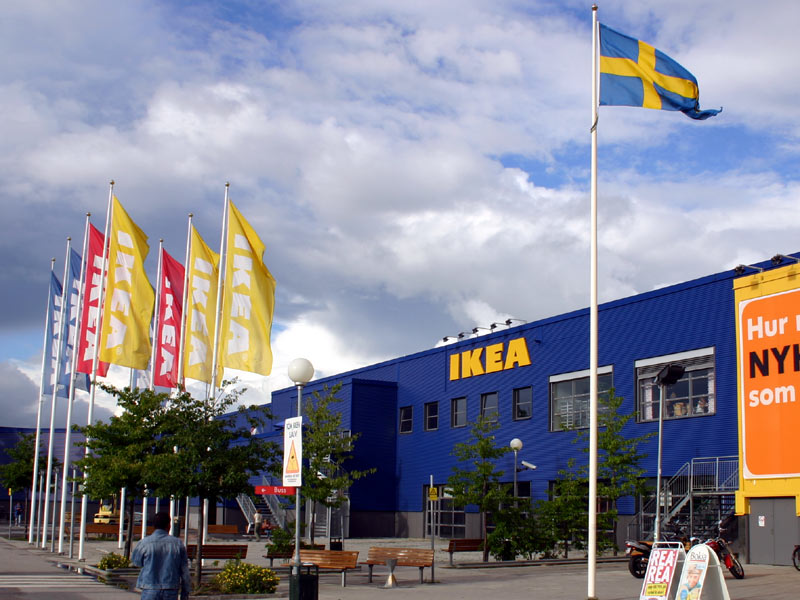
I’m gradually moving into the new apartment. A few days ago I took a backpack full of books and clothes over to the new apartment. Yesterday I went to Ikea (thank you, Sweden!) and bought a pillow and some lamps. All that remains to be acquired are a bed, a chair, and a place to put my clothes (dresser, etc). I could’ve bought a mattress at Ikea yesterday, but buying large items such as mattresses is not easy when one doesn’t have a car. To get to Ikea, I have to take the subway to Fürth (the next town to the west), and then a bus from the town center. I suppose I could ask my host family to drive me, but I’ve stayed at their house much longer than I thought I would, and I don’t want to impose.

Pictures of the apartment will come soon; it's a bit messy right now.

I’ve also been sitting in on many classes. I’ve developed a routine, since the first time in each class I’ve been asked to give an introduction. It’s getting rather repetitive, but so far I’ve been doing pretty well. Sometimes I get a roomful of blank stares; sometimes I get a roomful of laughs. I’m sure those of you in the academic field know this all too well. The youngest group I’ve worked with is a 6. Klasse, and the oldest is 13th grade, so to say. So far I’ve had the most fun with the 6. Klasse and one section of the 13th graders. The little children are very inquisitive and seem delighted to have someone who comes from the land of “The Simpsons” and “NHL 2008” in their class. The section of 13th graders all speak remarkable English, laughed at my jokes, and were generally very talkative. The other classes…well, it’s too early to say. Perhaps they’ll be a bit more talkative as the semester goes on. To be honest, I think I frightened one class. I spoke loudly and perhaps a bit fast. Just as they need to improve their English, I need to improve my pedagogical skills.

In two weeks, I’ll be giving a lesson on high school in the USA. I’ve started putting together a PowerPoint presentation on the different types of high schools, regional differences between schools, and student life. Also, with the US election coming up rather soon, I’m sure I’ll have to give a lecture on the American system of government. I’ve started compiling a presentation on the branches of government, another one on the party system, and later this week I’ll start working on the election system and the 2008 election. The Germans already know a fair amount about American politics; so far, some of the questions I’ve been asked included “what do you think about Sarah Palin?” and “who do you support in the 2008 election?” Pretty blunt questions, no?

Well, that’s about it! The only other interesting thing that’s happened was my getting my monthly pass for the public transportation system. I hope to get a bike in the near future. Supposedly, once a month there’s a bicycle flea market of sorts. Unfortunately, none of the locals with whom I’ve spoken seem to know where and when it is!

Dave

Tuesday, September 23, 2008

Some Pictures

Hey all. I'm still working with shaky internet connections, but I wanted to put up at least a few photos. Enjoy!
Heilig Geist Spital (Holy Spirit Hospital, the one on the left) was a hospital in medieval times, then a location for the city's lepers, and is now a restaurant. It sits on the Pegnitz River

Nuremberg's Hauptmarkt, with Frauenkirche (a Catholic church) in the background

Nuremberg's Imperial Castle. Inside, there is a youth hostel. So, for the first few days, you could say I lived in a castle!

A backpack on a train. Typical.

Wednesday, September 17, 2008

Servus!

Hey hey everyone! Or as the Germans say, “halli-hallo!” Even better still, as the Bavarians say, “servus!”

It’s been a little while since my last post, and for good reason. So, here it goes.

I arrived at Basel-Mulhouse airport, which sits on the Swiss-French border, on August 31. From there, I traveled by bus to Freiburg im Breisgau, where I studied for a semester last year. I stayed with my friend (who I met at Penn State while she was studying abroad) and her family. Visiting Freiburg once again was great. It was truly a pleasure to visit my old stomping grounds; the centuries-old church, the university cafeteria, the biergarten on top of a mountain…I even gave a tour to the new students on the program in which I participated!

On September 4, I packed up all my things, a large camping backpack, a medium-sized gym bag and a laptop case, and headed to Freiburg’s Hauptbanhof (main train station). There I boarded a train for Aachen by way of Cologne. Aachen is a small city right on the German-Dutch border. It is a historically significant city, because its main cathedral was not only the seat of Charlemagne’s empire, but also houses Charlemagne’s mortal remains (among other relics).  Furthermore, Aachen was the first German city reached by American forces in the European Theater during World War II. The city itself is rather small; I saw the historic center of Aachen in about 2 hours. Capitalism has struck the city well, as the old city streets are now lined with grocery stores, department stores, souvenir stores, and so on. While there, I stayed with my friend who I met while she was doing a residency abroad at the hospital where my father works.

On September 8, I once again packed up all my things and boarded a train back to Cologne, where I joined 179 other native English speakers. We traveled by bus to Altenberg, a pleasant small town outside of Cologne. There, we had our orientation conference. Most of the people were Americans, although there were also people from Canada, Australia, Ireland, England and Scotland. I was delighted to find out that there would be 2 other Americans in Nuremberg, one of whom was my roommate. He’s from Arizona and attended Fordham University in New York City. We’ve been in close contact and have met up twice since we arrived in Nuremberg. Anyways, the conference was good, save for my being slightly under the weather. I met 2 other Penn Staters and several people who had also done the same study abroad program as I did, albeit different semesters. We learned about making lesson plans, and did a sample 45-minute lesson in groups.

On September 11, I once more packed my things (notice a pattern here?) and boarded a train for Nuremberg by way of Frankfurt. I spent the train ride to Frankfurt talking with one of my colleagues who was on a train bound for Thueringia, the small federal state which borders Bavaria to the north. She got off at Frankfurt’s airport train station, while I had one more to go, Frankfurt’s Hauptbanhof. Well, the train was scheduled to arrive at 4:13PM on track 1, and my connecting train to Nuremberg was scheduled to leave at 4:21 from track 4. Well, as good fortune would have it, my train arrived in Frankfurt at 4:19 on track (to quote Dave Barry, “I am not making this up”) 18. So, with two minutes to spare, I dashed through the train station, all the while dreading having to explain to the person picking me up in Nuremberg that I’d be a little late. I weaved my way through the intricate series of obstacles: baby carriages, oversized rolling luggage, Euro-trendy teenagers decked out in white, pink, purple and green, guffawing German businesspeople, and so on. By the time I arrived at track 4, it was 4:22 and the train was still there. I leapt on board, and had to take off my backpack in the foyer to rest for a minute. This was probably the only time I’ll ever be happy that a train I was taking was running late.

I arrived at Nuremberg’s Hauptbanhof and was greeted by my Betreuungslehrerin (beh-troy-ungs-lair-er-in; “mentor teacher,” or simply the teacher with whom I’ll be working). I presented her with the bottle of wine I had purchased for her, and she drove me to the youth hostel where I’d be staying for a few days. I was originally supposed to stay with the schoolmaster, but due to some slight miscommunication he was out of town and was unable to have me stay at his house. So, I spent 3 nights at a youth hostel. This youth hostel is actually set inside Nuremberg’s famous imperial castle, one time the seat of the Holy Roman Empire. After answering a few questions, the teacher left and I went out and explored the city. I was by this point in time quite hungry, and asked the front desk clerk for a suggestion. He recommended a Doener place to me (Doener is a popular German-Turkish dish; it’s shaved meat with mixed vegetables and yogurt sauce in a piece of thick flat bread). We had a lost in translation moment, actually. He told me where his favorite Doener place was located. The German expression of favorites is stated by the prefix “Lieblings-“ and then whatever the favorite thing is (for example, Lieblingsmannschaft is favorite sports team). However, outside of this context the root word “lieb” usually pertains to love. So rather, he said “here is where you can find my loveliest Doener.” Unfortunately, his loveliest Doener stand was closed, so I had to settle for McDonald’s. It was not a total loss; I finally got to try a McRib sandwich. I’ll never have one again, either.

Well, I can sum my first impression of Nuremberg in one word; nay, one syllable: “wow.” This city is amazing! The city screams history, with its old bridges, churches, and town squares. I very much enjoyed meandering the cobblestone streets and narrow alleyways. I can’t really sum up how I feel about this place in one paragraph; I’ve only been here for a few days, and I love it already, but I also have another 10 months to describe it!

Two days ago, I received a phone call from my schoolmaster. He had returned, and would pick me up the next day at noon. So I once more packed up all my things and he drove me to his house, just north of the historic city center. I went to one of my schools today for a teacher conference, and had to introduce myself to a roomful of German teachers, of course, in German. It wasn’t difficult at all.

As far as I know, I’ll be working at 2 schools. Both are roughly equivalent to American high schools, but students often come at a younger age and stay until a later age. I’ll be working between the age groups of 13 and 16, providing the expertise that only a native speaker of English can provide.

It’s almost 11PM and I’m tired, so I’ll call it quits here. More to come, of course!

Monday, September 1, 2008

Hello everyone! This'll be brief, but I've arrived safely in Germany, and am currently at the IES EU Center, where I studied last year. I visited with the staff members for a while, and I will soon leave to meander around Freiburg.

More to come!

Sunday, November 4, 2007

I Think I Might Have the Stockholm Syndrome...

Well hello everyone! I just returned from a weekend excursion to Stockholm, Sweden! More on that in a second. First, I want to talk about Halloween.

Germans don’t celebrate Halloween. Why exactly, I’m not sure. I guess we Americans are just more paganistic. Just kidding.

Anyways, Halloween just isn’t a German thing. So, we Americans put together a Halloween party at one of my friends’ apartment. What was my costume, you might ask? Well, I really haven’t dressed up at all for the past few years. This year I decided why not. Have you ever seen the SNL sketch with Chris Farley trying out to be a Chippendale’s dancer? Well, that’s what I was. I wore a bowtie and black pants. It was a fun night.

Anyways, on with Sweden.

Ah Sweden, the land of such things as...


Ikea...

Abba...

...and death metal.

I had always wanted to go to Sweden, so when I found out earlier this semester that some friends had booked a round-trip flight for $40, I had to join in. We flew out of Basel-Mulhouse Airport on Thursday afternoon, and arrived in Stockholm around 5PM. It was pitch-black out. We boarded a bus called “Flygbussar” which I guess translates to “flight bus.” It was actually easy to translate some Swedish words, since Swedish is a Germanic language. That didn’t stop me from chuckling at such tram stop names as “Sockenplan,” Skogskyrkogården” and “Hammarbyhöjden.” So, we arrived at Stockholm’s main train station, and then took the local tram to our hotel. We stayed at a hotel connected to the Globe Center, where world-renowned musical acts have played.

It seemed like a rather upscale place, since our rooms had seating areas separate from the beds, as well as fancy bathrooms. We hadn’t paid much at all for the hotel, since it was offseason. We took the tram back into town and disembarked at Gamla Stan, Stockholm’s old town. Gamla Stan is actually an island, like many other parts of Stockholm, as the city sits at a point where the Batlic Sea meets Lake Mälaren. It also sits near a collection of islands called the Stockholm Archipelago. Anyways, we wanted traditional Swedish food, so we found a nice little restaurant off one of the main streets. I had Swedish beef steak with onions and garlic bread, accompanied by a Swedish beer called Klass III. Some of my friends dined on reindeer, which they said tasted like roast beef. What struck me most was the impeccable English spoken by the waitress. In fact, just about everyone we talked to in Sweden spoke remarkably good English, to the point that I wouldn’t have been able to tell they weren’t native English speakers (if their intense blond hair hadn’t given it away already). Something else even more impressive about Sweden was the policy on tap water. In Germany and most other European countries, one has to ask for tap water, which sometimes gets confused for “$10 bottle of still water” or is even frowned upon. In Sweden, tap water is given as abundantly as it is in the States. It’s the little things that sometimes matter the most.

The next day, we woke up around 8 and went to breakfast. Aside from the fact that the dining room looked straight out of an Ikea catalogue, the breakfast was amazing. In addition to the typical European breakfast buffet of bread with cold cuts and cheese, they had sausage, bacon, scrambled eggs, Danish pastries, cinnamon rolls, and even Kellogg’s Sugar Smacks! Our first stop was a tourist center. At the gift shop we found Viking helmets and pretend to be Vikings for a few minutes. There was also a Brio train set, much to my delight.

We walked to the Swedish royal palace and took a tour of the Swedish crown jewels and Royal Apartments. Both were very cool to see. The Swedish royal family doesn’t actually live in the Royal Apartments. They were used in the past, but are currently only used for visiting dignitaries such as royalty from other countries or heads of state/heads of government. Each visitor received their own coat of arms, and it was cool to see the South African coat of arms when Nelson Mandela visited Stockholm. Unfortunately there was no coat of arms for the U.S.A., but I can understand if the Swedes don’t want George Bush to visit.

On that note, Sweden is such a wonderfully socialized society. The streets are spotless, the metro is clean and efficient, and all the old buildings are very well kept. Granted Sweden is one of the most expensive countries I’ve ever been to, but the social programs seem to be working quite well.

After the Royal Palace we went to the Nobel Museum, which documents the history of Alfred Nobel and the prize which bears his name. It was an enlightening visit. We then trekked down to the water, and took a boat tour of Stockholm’s canals. I got some great pictures of the parks and walkways which run along the river, and I even got a picture of the house belonging to a member of Abba!

By the end of the boat tour, we were getting tired. Although the weather was quite pleasant, it was indeed Sweden and the temperature was a bit cold. We wanted to go to the Vasa Museum, which houses a 17th-century Swedish warship. So we walked to the museum, which entailed walking along the docks. There were lots of neat boats, ranging from river cruisers like we had ridden to personal sailboats, some of which dated back to the early 1900's. There were important safety signs along the way, such as my personal favorite, "watch where you're driving your car or you might fall into the river."


The Vasa was the pride and joy of the Swedish navy. It was built in the 17th century, a time when Sweden was intermittently at war with its neighbors for control of shipping channels. At this point in time, Poland was the opponent. The ship first set sail on August 10, 1628. However, 20 minutes later, it capsized and sank. Sure speaks well of the Swedish navy, doesn’t it?

Anyways, the ship was raised in the 1960’s and is now on display. It’s in pretty good condition which made for some pretty cool pictures. After the Vasa Museum it was dinnertime, and we all had only one thing on our minds: Swedish meatballs.

After searching Gamla Stan for about an hour, we returned to the tourist center and asked. The lady pointed us to a nice restaurant off one of the main squares. It was a rather upscale place, but the meatballs were relatively inexpensive. The restaurant had a dance floor and a guy singing and playing the piano, which created a wonderful dining atmosphere. The meatballs didn’t last long, and two of our group had to depart for an appointment at the Absolut Ice Bar, a bar sponsored by Absolut Vodka Company that is made entirely of ice. The rest of us sat at the restaurant for a bit more, then went to, of all places, TGI Friday’s for a drink.

Afterwards, we went back to the hotel and called it a night. When we woke up the next morning, the ground was covered with a thin layer of snow! Sweden just kept on getting better and better!

However, the rest of the day proved to be a headache. We got to the airport on time, and boarded the plane. It was supposed to leave at 12:30, and we pulled out of the gate, and then pulled back in. After about 30 minutes, the captain notified us that this plane would not fly. So we went back into the terminal and waited for another plane to be sent for us. It arrived 2 hours later, and then we departed for Basel-Mulhouse. We landed, and found that the next Freiburger Reisedienst, the airport bus, wouldn’t be for another 4 hours. So we ate a long dinner at the airport’s restaurant, and frolicked through the nearly-empty terminal to kill time. Finally the bus came at 10:30PM, and we arrived in Freiburg about an hour later. Nonetheless, it didn’t put a damper on the whole trip. This weekend was by far one of the highlights of my trip.

So what’s next? Paper writing, London next weekend, then Brussels, Luxembourg and Paris the week after that.

Bis später!

Dave